

纯粹的修行者 - 意大利音乐人Hōrai Sattvahr专访
- Volcano Magazine

- Jun 1
- 15 min read

今天的采访嘉宾是大家都非常熟悉的一位音乐家——他就是曾在2025年作为抑郁黑金属名团夜郁(Nocturnal Depression)的吉他手来到中国演出的意大利音乐家Hōrai Sattvahr。作为在金属乐场景深耕了20余年的音乐家,Sattvahr在除了与夜郁的合作之外,还有着非常丰富的个人音乐履历。在这次采访中,Sattvahr向我们分享了来到中国演出的体验,个人音乐之路的历程以及个人创作与乐队集体创作这两者的不同与同一之处。
(V: 代表笔者 S: 代表Sattvahr)
Today’s guest is a musician familiar to many—Hōrai Sattvahr, the Italian musician who performed in China in 2025 as the guitarist for the renowned depressive black metal band Nocturnal Depression. As a musician with over two decades of experience in the metal scene, Sattvahr has a rich solo career in addition to his work with Nocturnal Depression. In this interview, Sattvahr shares his experiences performing in China, the journey of his musical career, and the similarities and differences between solo composition and collaborative band writing.
(V: Author S: Sattvahr)
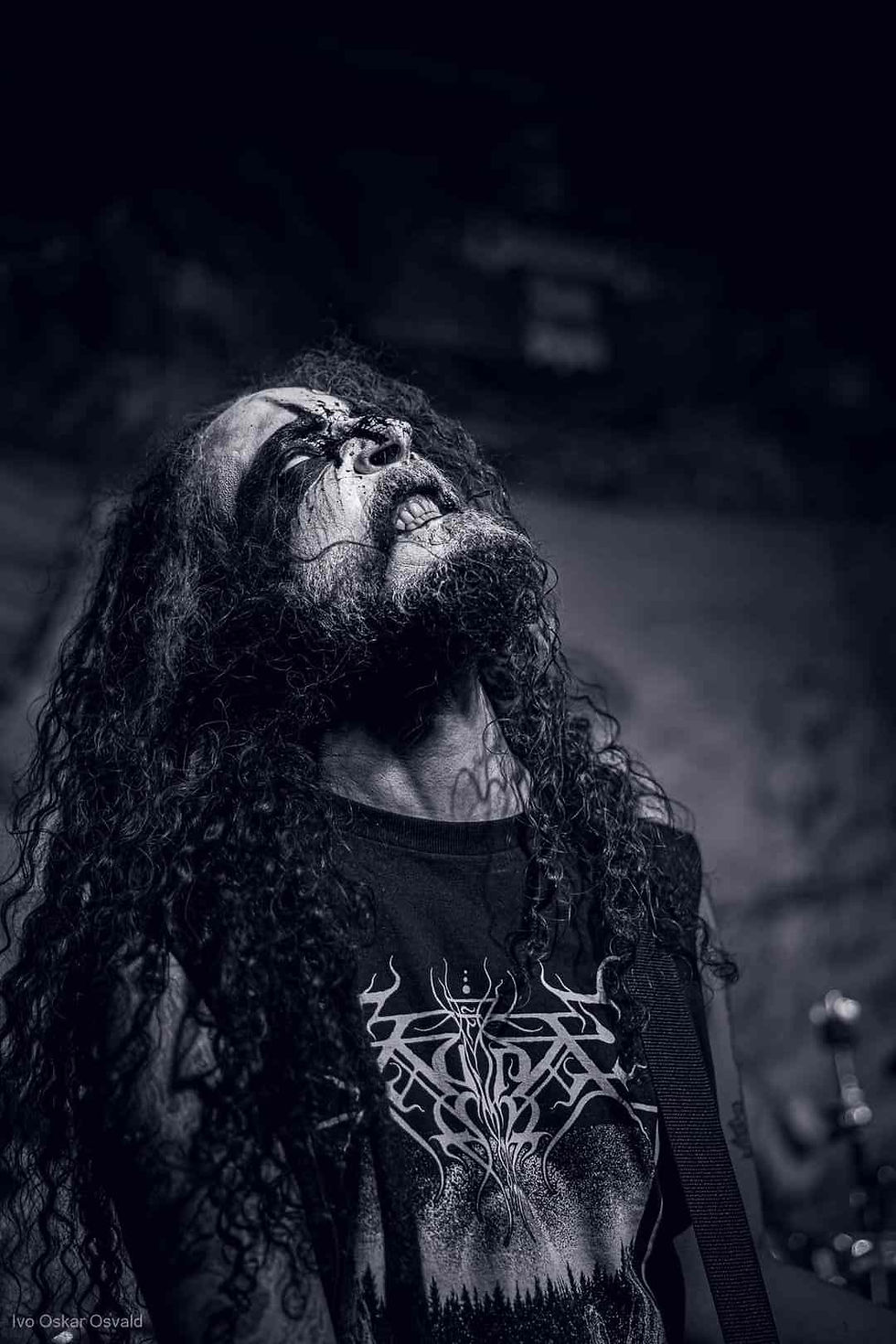
采访对象:Sattvahr
采访时间:2026.06.01

V: 你好Sattvahr!非常感谢您接受Volcano Magazine的采访。许多中国乐迷是通过Nocturnal Depression认识你的。但抛开集体身份,作为独立的音乐人Sattvahr,你觉得当下的自己与那个站在舞台聚光灯下的乐手有什么本质的不同?
Hello Sattvahr! Thank you so much for accepting this interview with Volcano Magazine. Many Chinese music fans know you through Nocturnal Depression. But setting aside your collective identity, as an independent musician, Sattvahr, what do you see as the fundamental difference between yourself now and that musician standing under the spotlight?
S: 你好,能接受这次采访是我的荣幸。可以说,你所指的艺术驱动力本质上完全相同,但所处的环境在很大程度上决定了某些特质会比其他特质更凸显出来。与Nocturnal Depression在中国巡演的经历确实非常特别且独一无二,这不可避免地影响了我站在舞台上展现自己的方式,甚至对我来说,这也赋予了舞台表演全新的意义。要用恰当的词语来描述这种现象实在太难了;在那次与全场观众共同经历的体验中,我感受到了前所未有的投入感。
Hi, the pleasure is mine. One could say that the nature of the artistic drives you are referring to is the exact same, but the context plays a major role in favoring the emergence of certain aspects over others. The touring experience in China with Nocturnal Depression was truly special and unique, and it inevitably influenced the way I carry myself on stage, giving it a whole new meaning even for me. It is incredibly difficult to find the right words to describe this phenomenon; I experienced a degree of involvement in that shared experience with everyone in the room that I had never felt before.
V: 在乐队的框架里演奏,往往需要服务于整体的氛围和概念。当你为自己创作,或者仅仅作为纯粹的“演奏者”时,你会去表达哪些在乐队里无法表达的东西?
Playing within a band often requires serving the overall atmosphere and concept. When you're composing for yourself, or simply as a "performer," what do you express that you can't express in a band?
S: “乐队”和“单人创作”这两个维度对我来说是互补的,我感觉两者都有必要体验。然而,当我为自己创作时,我有机会充分表达自我,并追随一个对我来说完全连贯且完整的愿景。当我为我的乐队创作时,我是从与乐队成员分享的角度出发:当我内心深处有某种东西需要表达出来,并且它与乐队的理念或我与成员之间的联系产生共鸣时,一首专属于这支乐队的歌曲就诞生了。另一方面,单人创作则遵循着不同的动态;这是一个更难以掌控的过程,却能毫无阻碍地自然流淌。那些我不愿与他人分享的生活片段或个性特质,在这种创作环境中找到了自由的出口,从而产生了独特且有时难以预料的体验。更简单地说,你可以说我为乐队创作的歌曲是合作关系的成果,而个人作品则源于内在的自我探索,这种探索仅在作品发布的那一刻向外投射,此前从未显露。
The "band" dimension and the "solo" dimension are complementary to me, and I feel the need to experience both. However, when I compose for myself, I have the opportunity to fully express myself and follow a vision that feels perfectly coherent and complete to me. When I write for one of my bands, I do it from a perspective of sharing with my bandmates: when there is something inside me that needs to come out and it resonates with the band's concept or the bond I share with its members, that's when a track for that specific band is born. Solo songwriting, on the other hand, follows different dynamics; it is an even less controllable process that flows without friction. The aspects of my life or personality that I don't share with others find a free outlet in this context, giving rise to unusual and sometimes unpredictable experiences. To put it even more simply, you could say that songs composed for one of my bands are the fruit of a relationship, whereas solo tracks derive from an internal process, which is projected outward only at the moment of publication and never before.
V: 让我们把时间往回拨一些,在起步时期,是什么让您想要演奏金属或者说黑金属这一类型的音乐?是听到的唱片、看过的演出,还是其他什么事让你意识到“这就是我想做的事”?
Let's rewind a bit. In the early days, what made you want to play metal, or rather, black metal? Was it the records you heard, the shows you saw, or something else that made you realize, "This is what I want to do"?
S: 我11岁时开始听金属乐,是从Metallica的《Ride the Lightning》开始的。即使在那时,我也凭直觉感觉到这种音乐可以成为我表达内心深处那个格格不入的部分的方式,尽管当时我并不理解这种表达方式的含义。大约14岁时,我看了几个本地乐队的现场演出,第一次接触到了真正的黑金属及其美学。我立刻被它深深吸引,直到今天,我仍然在追求那种独特的冲击力。那就是这段旅程的开始,二十七年后的今天,这段旅程仍在继续。
I started listening to Metal at the age of 11 with Metallica's "Ride the Lightning," and even back then, I intuitively sensed that this music could become a way to give voice to a part of me that didn't fit into the world, even though I didn't understand it in those terms at the time. Around the age of 14, I saw some local bands playing live and had my first exposure to True Black Metal and its aesthetics. I was instantly struck by it, and to this day, I still pursue that specific kind of impact. That was the start of a journey that is still ongoing, twenty-seven years later.
V: 让我们聊聊声音本身。作为一位同时负责演出和创作的音乐家,可以介绍一下你在录音和巡演中所用的设备吗?你追求的“完美音色”是什么样的?是冰冷的绝望感,还是一种厚重如雾气的包裹感?你会用哪些特定的手法(比如调式、节奏型)去营造这种情绪?
Let's talk about the sound itself. As a musician who is both performing and composing, could you describe the equipment you use for recording and touring? What is your ideal "perfect sound"? Is it a cold, desperate feeling, or a heavy, foggy, enveloping sensation? What specific techniques (such as modes, rhythms) do you use to create this mood?
S: 我并不是一个狂热的设备爱好者。小时候我总是囊中羞涩,所以对遥不可及的东西过度感兴趣对我来说毫无意义,这种态度自然而然地延续至今。此外,我一直欣赏原始的制作风格,欣赏它所传达的那种亲密感和真实感,所以我总是利用手头现有的设备,不断尝试和探索它们能带来的效果。我不喜欢数字解决方案,但同时我也讨厌复杂化,所以我把设备精简到最基本的核心配置,我对现在使用的设备非常满意:一个不错的纳米管音箱头和几个不错的效果器。对我来说,唯一重要的是吉他riff都能够保持其原本的意义;设备固然重要,但只是整体中一部分。至于技巧,说实话,我其实并不完全清楚自己在做什么。我是个自学出来的音乐人,如果音乐是我接受过正规教育的科目,我可能早就放弃了,就像我十几岁的时候放弃学业一样。我摸索着学习,创作歌曲,完全无视乐理,一遍又一遍地在指板上寻找能够表达我想要的情感的音符。从技术角度来看,我的方法或许是错误的,但这没关系,我也没有别的选择。成年后,我才发现了这种创作方式背后的乐理依据。即便如此,那些接受过正规音乐教育的朋友和同事仍然会肯定我写的和声是对的。
I'm not a huge gear enthusiast. When I was a kid, I was perpetually broke, so it made no sense for me to get overly interested in something that was out of my reach, and I naturally maintained this attitude over time. Furthermore, I have always appreciated raw productions, the sense of intimacy and authenticity they can convey, so I’ve always used whatever I had at my disposal, experimenting and exploring what I could achieve with it. I don't like digital solutions, but at the same time, I hate complications, so I’ve stripped my gear down to the bare essentials and I'm very satisfied with what I'm using: a good nanotube head and a couple of good pedals. The only thing that matters to me is that the riffs maintain their intent; gear certainly plays a role in this, but it is only a part of the whole. Regarding technique, the truth is I don't exactly know what I'm doing. I am a self-taught musician and if music had been a subject of formal study for me, I probably would have abandoned it, just as I did with school as a teenager. I learned my own way, composing songs and completely ignoring music theory, searching time after time for the notes on the fretboard that corresponded to the emotion I wanted to express. My approach is probably wrong from a technical standpoint, but that's fine, I wouldn't have had any other way. As an adult, I later discovered the clinical explanation behind this way of functioning. Friends and colleagues with a formal musical education still confirm to me that my harmonies are correct anyway.
V: 作为一位出色的吉他手,你有哪些个人非常喜欢的吉他手吗?哪些吉他手在演奏方面在你建立自己的演奏特点的过程中对你产生了比较大的影响?你最欣赏他们身上的哪些特质?
As a skilled guitarist, are there any guitarists you particularly admire? Which guitarists have had a significant influence on your playing style as you developed your own? What qualities do you admire most about them?
S: 我其实从来没有过所谓的“吉他英雄”,这大概就是出于上述原因。我一直欣赏乐队作为整体的表现,并将吉他技巧视为服务于艺术表达的工具,而非独立的关注对象。话虽如此,当我第一次现场观看Inquisition的演出时(我记得是2003年,在奥地利的一个音乐节上),Dagon的表演让我惊叹不已,从那以后,他们就成了我最喜欢的乐队之一。
I've never really had guitar heroes, likely for the reasons mentioned above. I have always appreciated bands as a whole and viewed guitar technique as a tool at the service of artistic expression rather than an object of interest in its own right. That being said, the first time I saw Inquisition live (I think it was 2003, at a festival in Austria), I was blown away by Dagon's performance, and they became one of my favorite bands ever since.

V: 对于接下来的创作,您是否有非常想一起合作的艺术家?如果有机会,你是否愿意尝试其他形式,比如影视配乐之类的音乐创作?
For future songwriting, are there any artists you'd like to collaborate with? If given the opportunity, would you be willing to try other forms of music composition, such as film scores?
S: 音乐对我来说是一个非常私密的领域,因此与其他艺术家合作可能会比较复杂。不过,正如我和乐队成员之间自然形成了默契一样,我不排除未来与其他艺术家也能产生这种化学反应。但这更可能是一个自然而然的过程,而非刻意追求的结果,所以目前我无法告诉你们任何具体的合作对象。过去,我曾以个人名义尝试过其他形式的音乐创作,当时有一个名为Entactic的缓拍/氛围/迷幻浩室(downtempo/ambient/psytrance)项目。说实话,我很后悔因为时间不足而搁置了它,因为这是一个非常有成就感的项目,且非常注重现场表演。事实上,我只发行过一张EP,但我创作了一整套现场演出曲目,直到2016年还在舞台上表演。
Music is such an intimate realm for me that collaborating with other artists can potentially be complicated. However, just as a natural chemistry was built with my bandmates, I don't rule out that it could happen with other artists in the future. But it would likely be a spontaneous process rather than something actively sought after, which is why I wouldn't know any specific names to give you. In the past, I experimented with other forms of musical composition, always as a solo artist, with a downtempo/ambient/psytrance project called Entactic. Honestly, I regret putting it aside due to a lack of time, because it was a very fulfilling project and highly oriented toward live performance. In fact, I only released a single EP, but I had composed music for an entire live set that I performed on stage until 2016.
V: 对于深受抑郁/黑暗主题吸引的创作者来说,“痛苦”有时会被当作一种创作工具。你怎么看待这种关系?你是驾驭情绪,还是臣服于它来换取歌曲的灵感?
For creators deeply drawn to depressive/dark themes, "pain" is sometimes used as a creative tool. How do you view this relationship? Do you control your emotions or surrender to them for song inspiration?
S: 我们谈论的是一个随着时间推移而不断演变的过程,就像我自认为也在不断成长一样。老实说,如果可以的话,我很乐意摆脱那些催生出我音乐的情感包袱,但与此同时,我也明白艺术创作(我相信这很常见)在我人生的自我调节过程中扮演着重要的角色。在痛苦最剧烈的时候,当痛苦占据我精神世界的中心时,我根本无法进行创作,因为写作所需的资源,例如精力、动力和灵感,通常都很匮乏,同时,我的执行力也会暂时受损。歌曲的创作会在发生这些之后,如今它已成为我处理和整合痛苦和/或创伤经历不可或缺的一部分。
We are talking about a process that has evolved over the years, just as I like to think I am evolving myself. Honestly, I would gladly do without the emotional baggage from which my music was born, but at the same time, I understand how artistic creation (as I believe is quite common) has played an important role in self-regulation throughout my path. During acute phases of suffering, when it takes center stage in the mental landscape, composition is impossible for me because the resources necessary for writing, such as energy, motivation, and inspiration, are generally lacking, and at the same time, executive functions are temporarily compromised. The creation of the tracks happens at a later time, and it has now become an integral part of my process for processing and integrating painful and/or traumatic experiences.
V: 在创作歌词时,你会从哪些方面汲取灵感?是像讲故事一样,还是有其他的灵感来源?
When writing lyrics for a song, what sources of inspiration do you draw from? Is it like storytelling, or are there other sources of inspiration?
S: 我特别钟爱隐喻的力量,因为它能以间接且不说教的方式传达复杂的人生体验,同时保留其中的情感细微之处。这使得听众或读者既可以领会其中蕴含的意境,也可以错过这些暗示,并可能通过融入自身的生活经历将其内化为己有;正是通过这种方式,我和我的听众之间产生了真正的互动。
I particularly love the power of metaphors because they allow for indirect, non-didactic communication of complex life experiences, preserving their emotional nuances. This allows the reader/listener to either grasp or miss the suggested impressions and potentially make them their own by integrating their own life experiences; in this way, a real interaction occurs between me and the person receiving my music.
V: 可以分享一下你最近的歌单吗?你最近在听哪些乐队或什么类型的音乐?
Can you share your recent playlist? What bands or genres of music have you been listening to lately?
S: 我喜欢听整张专辑,而不是单曲。我最近常听的专辑歌单(指的是现在正在听的,不是我一直以来最喜欢的)包括:
● Judas Priest – "Defenders Of The Faith" & "Painkiller"
● The Evpatoria Report – "Golevka"
● Burzum – "Hvis Lyset Tar Oss" & "Hlidskjalf"
● Slowdive – "Just For A Day"
● In Flames – "The Jester Race"
● Gorgoroth – "Pentagram"
● Carbon Based Lifeforms – "World Of Sleepers"
● Enthroned – "Towards The Skullthrone Of Satan"
● Via Ad Mortem – "Requiem I: Through The Path, Over The Ruins"
● Sylvaine – "Nova"
I like to listen to full albums rather than single tracks. In my recent rotation (meaning current listening, not my all-time favorites) there are:
● Judas Priest – "Defenders Of The Faith" & "Painkiller"
● The Evpatoria Report – "Golevka"
● Burzum – "Hvis Lyset Tar Oss" & "Hlidskjalf"
● Slowdive – "Just For A Day"
● In Flames – "The Jester Race"
● Gorgoroth – "Pentagram"
● Carbon Based Lifeforms – "World Of Sleepers"
● Enthroned – "Towards The Skullthrone Of Satan"
● Via Ad Mortem – "Requiem I: Through The Path, Over The Ruins"
● Sylvaine – "Nova"
V: 除了音乐之外,你还有其他爱好或兴趣吗?另外,当你不创作或演出的时候,你会如何消磨时间?
Besides music, do you have any other hobbies or interests? Also, how do you spend your time when you're not creating or performing?
S: 毫无疑问,佛法是我生命中最重要的部分,尽管这并不意味着我是一个学识渊博的弟子或品德高尚的修行者。这些年来,我为此投入了大量的时间和精力。我喜欢和妻子去南蒂罗尔,与所爱之人共度美好时光,并关注自身的身心健康。此外,我还有一堆被搁置的爱好;这些活动或兴趣在最初曾让我全情投入,但最终我却失去了兴趣和动力:埃里克森催眠、健身、绘画、营养学、精神航行学,以及许多其他领域。
The Buddhadharma is without a doubt the most important aspect of my life, even if that doesn't make me a particularly learned student or a virtuous practitioner. Over the years, I have dedicated a lot of my time and resources to it. I enjoy going to South Tyrol with my wife, spending quality time with the people I love, and focusing on my well-being. I also have a decent graveyard of abandoned hobbies; activities or interests that completely consumed me for an initial period, but for which I eventually ran out of interest and motivation: Ericksonian hypnosis, fitness, drawing, nutrition, psychonautics, and many others.
V: 意大利有着独特的金属场景。作为身处其中的资深音乐家,你觉得意大利的金属音乐氛围与其他欧洲国家(如北欧)有什么本质区别?
Italy has a unique metal scene. As a seasoned musician deeply involved in the metal scene, what do you see as the fundamental differences between Italy's metal music scene and those of other parts in Europe (such as Scandinavia)?
S: 我认为在相当长的一段时间里,意大利在金属乐界确实保持着鲜明的独特性,但随着全球化、互联网时代等因素的影响,其风格界限逐渐与欧洲其他地区模糊交融——这在其他国家似乎也是普遍现象。我们确实拥有许多优秀的乐队,但同时也存在大量……嗯,过多的背景噪音。近年来,我很高兴看到现场演出观众的平均年龄再次下降;这一现象在意大利出现的时间比北欧晚了几年,但这对乐坛的生存至关重要。
I think that for a certain period of time, Italy preserved a distinct identity within the Metal scene, but gradually its stylistic boundaries have blurred into the rest of Europe, as I feel has happened in every other country, likely as a consequence of globalization, the internet era, etc. We have genuinely great bands, but also a lot of, well, too much background noise. In recent years, I’ve been pleased to see the average age at gigs dropping again; this is a phenomenon that occurred in Italy a few years later than in Northern Europe, but it is fundamental for the survival of the scene.
V: 现在,在世界各地的金属乐场景,特别是黑金属场景里,越来越多的年轻音乐家开始组建自己的单人乐队。对于刚刚起步、试图在极端金属领域发出自己声音的年轻人,你会给他们什么建议?
Nowadays, in metal music scenes around the world, especially black metal, more and more young musicians are forming their own one man bands. What advice would you give to young people just starting out and trying to make their voices heard in the extreme metal genre?
S: 我并不觉得自己有资格给出建议,但如果仅凭我在圈内的年龄和资历来勉强承担起这个角色,我的建议是:请珍视并守护你的艺术纯粹性。这应该高于一切之上,远比数字、点击量以及各类数字平台的指标更为重要。不要把你的音乐视为一种需要出售的产品,而应视其为值得珍视与尊重的事物,要将其守护并保护在商业运作的漩涡和外界的浮躁之外。质量胜于数量,而艺术的纯粹性永远是首要的。
I don't feel like I am in a position to give advice, but if I were to assume that role merely as a matter of age and seniority in the circuit, my advice would be to look after and protect your artistic integrity. That should come before everything else, well before numbers, views, and the various metrics of digital platforms. Do not think of your music as a product that needs to be sold, but as something worthy of care and respect, to be guarded and protected from commercial dynamics and the sloppiness of the world out there. Quality over quantity, and integrity always.
V: 再次感谢Sattvahr接受这次采访!希望之后还能在中国见到你,也希望这里的乐迷们通过这次采访能更了解你的音乐。
Thank you again, Sattvahr, for this interview! I hope to see you again in China, and I hope that fans here can learn more about your music through this interview.
S: 感谢大家的关注。无论是以音乐人的身份还是以旅行者的身份,我都会尽快重返中国。中国是我至今为止去过最美丽、最有趣的国家。
Thank you for your interest. I will return to China as soon as possible, whether as a musician or as a traveler. It is the most beautiful and interesting country I have ever visited.


Comments